Sunday, May 8, 2016

ELON MUSK by Ashlee Vance

Elon Musk’s tweet about Tesla Model 3 launch made headlines in India. The Guardian states 400,000 people worldwide have pre-ordered this car and Musk said it is the biggest consumer product launch ever. To my mind - It’s an incredible product campaign - as deliveries of this car will start only at the end of 2017.  I was naïve to think like this… What if Elon Musk owned an Asset Management company? How he may have looked at designing Mutual Fund Products? I started reading Elon Musk by Ashlee Vance to know more about Tesla.

In 1990s, Elon was keen on building a full-service financial institution online. Navigating through regulator was not an easy one, but he still started X.com, a finance start-up. The company had in fact secured a Mutual Fund license but later moved into to Internet payment solutions. My question was answered when I read about his views on Financial Services. He says, all the bankers did was copy what everyone else did. Looking at Elon's track record – he would have created a mutual fund scheme which is highly compelling to invest. 


Ashlee Vance narration about Elon Musk's life is extremely engaging. After reading about Telsa and SpaceX, one can presume that people working in Detroit and Boeing would have never imagined like Musk. In other words, a start-up can catch large corporates unaware.

Mr.Vance story telling on as to how SpaceX was built and team’s experience at early stage is captivating. SpaceX venture demonstrates many insights – about creativity and execution skills. The office was made more like living, because of the number of hours team put it. SpaceX took 6 years and 500 people to make first privately developed liquid fuel vehicle to go into the orbit around the Earth. An inspirational one. Why do large corporates doesn’t create an environment to nurture creativity and get the execution right?

Couple of days ago, I saw a tweet from one of the celebrated fund manager from India that Elon Musk got Tesla and SpaceX right due to sheer luck. I vehemently disagree to his statement. One of the board of directors of Tesla puts it aptly – that ability to stay focussed in the midst of a crisis stands as one of Musk’s main advantages over other executives and competitors. Ashlee Vance has skilfully elucidated the leadership skills of Musk. He has mastered the art of getting the most out of his employees and hence maximized the power of the individual. 


I suggest that this book is a must read for parents. The first few sections of the book tells the story about his grandparents and parents in Africa and his life in Canada. This teaches us how insane set of experiences can alter the way we look at risk. Do parents strive to give powerful learning experiences to their children? Musk attributes his success to his suffering that helped to make him who he is and gave him extra reserves of strength and will. 

Thursday, March 31, 2016

The Golden Tap - Kashyap Deorah

I started reading "The Golden Tap" during the Initial Public offer of Infibeam-the first e-commerce company in India. They were aggressively marketing, but I was very skeptical as their proposition was not compelling. Its a coincidence, that this book refers to the story of Internet IPOs in India during 2005-2008. Only three companies were well funded during that period, later none of them got significant funds. May be the Infibeam promoters understood the timing well and investors didn't. 

As we all know e-commerce business is a red hot sector for Venture Capital (VC) industry. I always had this question -what makes VCs to veer towards a startup and lavishly fund them? Hence, I was very keen to read this book. The book captivated me, when i read a section on This-of-That investing. This=established market spaces. That=emerging market countries. Ideas that are successful in the US, pick the ones that will apply in the Indian Market and then infuse funds. My view this investment strategy is very naive one. Its similar to using copy & paste function in an MS Excel sheet to copy a formulae. A razor-sharp section explaining the VC investment process. 

Mr.Deorah's journey from IIT-Bombay to Silicon Valley and then back to Mumbai is a breezy read but with lots of substance. I liked the way he started his new business venture- Chaupaati Bazaar and sold his venture to Mr.Kishore Biyani. It was inspiring the way he set up the firm, and the way the deal was closed with FutureBazaar.com. 

Mr.Deorah has shared an interesting observation about early days of Flipkart.com, they were fanatical about customer experience (CX) at any cost. Mr.Bansal, co-founder owned up the entire brand experience for his customer. I felt, Flipkart implemented CX culture in early days (2009) where in most of large corporates may have realized it only post 2013. No wonder, they have a great brand loyalty. 

The kernel of this book is about perspectives on valuation of Flipkart, Housing.com and the way the speculative funds are flowing into the start-up ecosystem. His view on Unicorns made me realise about valuation game. I agree with Mr.Deorah's view on Housing.com episode. Getting excess funds alone cannot drive success, leadership skill at the top is key success. Now, I started respecting Zomato as a firm - they had not raised money from global funds in its journey to becoming a unicorn. The section on Unit Economics is a very prized one. In a funding driven e-commerce companies the operating losses (loss per transaction excluding fixed costs) ranged from -15% to -30%. 

Lots to insights from Mr.Deorah's venture - Chalo app - customers could use this in restaurants for a seamless experience. The way he went about striking a deal with OpenTable was brilliant. My take away from both Chalo App & Chaupaati Bazaar was Mr.Deorah knew the significance of product which most Indian tech entrepreneurs don't attach importance. After completing the book its tacit now what drives the VCs to gaze at start-ups. A must-read for all start-ups. 

It appears to me that the story has not ended as the Golden Tap has not gone dry yet. The question is - After the tap goes dry - who will pay for the "convenience" e-commerce companies or Indian consumers?


Sunday, February 28, 2016

Zero to One -Peter Thiel

Why do large companies fail? This question always bothered me as these firms have access to abundant resources and tech knowhow, but why does  "consistent growth" elude them?

Only 12% of the 1955 Fortune 500 companies were on the list in 2015, and nearly 88% of the companies from 1955 have either gone bankrupt, merged with (or were acquired by) another firm, or they still exist but have fallen from the top Fortune 500 companies. Source: American Enterprise Institute.  
In India too, over a ten year period, the Sensex churns by around 50% i.e. of the 30 stocks in the Sensex at the beginning of a decade, only 15 are left by the end of it. Source: Ambit Capital.


After reading Peter Thiel’s book, I have got many answers to my question on consistent business growth. In times to come, this book will recognised as a great "classic”. I was told this book is relevant for start-ups and but I believe it’s highly relevant to large firms too. His notes on "how to build a future" may salvage many large firms.
His 7 questions that every business has to answer, unravels the perception of every business model. They are proprietary  technology, the timing of business, market share, people , distribution , durability and the last is the "secret" question. I wish, all the promoters & CEOs read this as this may save lots of dollars. It’s so relevant in the current context of global economy.  
If we were to start analysing companies based on these 7 qualitative parameters – I am certain many companies may fail in these parameters hence may not be around after few years. For Instance regarding distribution - I spent more than 15 years in Mutual Fund Distribution , I completely related to his perspective on “distribution” and its significance for the success of a firm. I found his approach very pragmatic - superior sales and distribution team can create a monopoly without a product differentiation. 

His viewpoint on business success is attributed to luck or skill is sharp.  His  stance on of how firms operate in "Indefinite Optimistic" mode is shrewd. If one analyses this philosophy, here the business simply believes the future will be better, but it doesn’t know how exactly to get to this mode , so no specific plans. 

Now if we were to look around the companies which operate in this mode - there are plenty without a specific plan and eventually may disappear. To my mind, some of the new firms entering into manufacturing of smartphones are in indefinite optimism mode. They may be believing that surge in demand of smartphones in future will invariably rev up their product sales.

"Secrets" section of this book is worth reading many times as it is profound. Generally most of us operate in a mode of "I know all". He says most people think only in terms what they have been taught. There may be place to look for business opportunities where no one is looking. Companies may be seeking & working within their experience boundary akin to a personal computer - seeks & reads file from existing files & folders. 


Saturday, January 23, 2016

Triggers


Marshall Goldsmith's previous book "What Got You Here Won't Get You There" was very insightful and a must-read for the corporate world. His latest book "Triggers" is an exceptional and pertinent book for the present-day world.

A "trigger" is any stimulus that reshapes our thoughts and actions. 
What will trigger us in a desired behaviour path?   
This book helps you understand how to close the gap between  "ideal you" and the "real you"


His understanding on why don't we become the person we want to be is worth reading many times. He calls this as "Belief Triggers" these stop behavioural change in its tracks. Generally we employ these to justify our inaction and then wish away the result. This sets the context for behavioural change and leadership.

He makes one realise, the high correlation of our behaviour with the environment we live in. His example on how spending time on airplanes has changed over last three decades is lucid to make us understand about environment triggers. Three decades ago being on plane was ideal environment for reading and writing in a place of serenity. But, now phones, screens and inflight environment has dragged the productivity. We think we control our environment but in fact it controls us.

I felt these are precious:

A) executing the change we hold as a concrete image in our mind is a process. The act of self-questioning- so simple, so misunderstood, so infrequently pursued- changes everything.

B) The concept of daily questions - "commitment device" - this focusses on where we need help, not where we're doing fine. It compels us to take things one day at a time. By focussing on effort, they distract us from obsession with results.

This book intends to spark many positives in you and make it last for a longer time. 

A marvellous book by Mr.Goldsmith

Saturday, October 10, 2015

"Working out of the box"

"Working out of the box" by Ms.Aparna Piramal Raje's book intersects between  the business & design. It dwells deeper on workplace, office design and connects with leadership styles of 40 CEOs. A quick tour of 40 corner offices is one of the compelling reasons to read this book. 


You may find these below excerpts very insightful.

Mr.G.V.Sanjay Reddy, M.D. of infrastructure conglomerate- his soundproof office overlooking the airfield serves as a metaphor for his ability to stay calm amidst turbulence. Indeed this is truly composed.

An imperfectly constructed slanted walls in Mr.Vikram Limaye's - CEO of IDFC Ltd., office underline the problem of building world-class infrastructure in India.

Ms.Lynda Gratton- CEO of Hot Spots Movement situated in one of Europe's most beautiful buildings. Her insights on the future of work - is that Organisations must stop confusing hours worked with output, and must understand that people must not be chained to a desk to be productive.

Mr.Park Won-Soon, the Mayor of Seoul, an anti-corruption activist. Each item in his office  has a story. The hand written Post-it notes, kitchen garden & bookshelves in between slanted cabinets - representing social gaps.

Mr.Kishore Biyani, Chairman of Future Group - his office has a wall of portraits of select world leaders. The last panel in the collage is a mirror, where anyone can see themselves- suggesting that anyone can aspire to be a world leader.

Google's office desks are height-adjustable, enabling occupants to stand and work. The workplace is a direct expression of the company's belief that in order to achieve extraordinary results. 

Workplace & culture are key variables to enhance the productivity of employees. 

Sunday, July 19, 2015

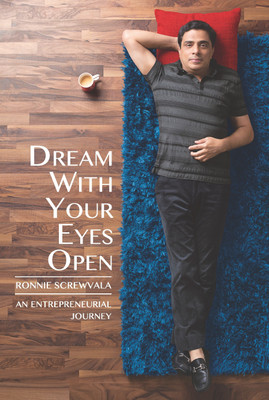
Dream with Your Eyes Open: An Entrepreneurial Journey


Dream With Your Eyes Open by  Ronnie Screwvala is an inspirational and incisive book. He has shared his insights from his 25 years of work experience. 

I found this following section on business leadership is a must read. The most valuable skill is knowing to spot the opportunities and avoiding failures.  Identifying “Trucks” and “Trends"- Ability to spot a potential trouble is critical to save time, energy and grief, lest this truck will run over. He says organisations can thrive by having a honest and frank interaction on “trucks” and “trends”. Biggest problems getting in the way of these candid conversations is one word: "presentation".  Invariably we present what people higher on the organizational chart want to hear. 

He shares his many key learning's during his new content production at UTV. Author and his team’s resilience story to obtain a censor certificate for "Rang De Basanti"It is motivating to read as to how his team embarked to create 260 episodes each year in 1994- a television series Shanti. Launch of new kids channel- Hungama TV. They disrupted this space by using content from Japan. Doraemon and Shin-Chan.  Despite pressure, legal and otherwise he & his team were undaunted while producing "No One Killed Jessica" 

'When you’re driven by your peers, you are not being disruptive". After reading this statement- now i keep reminding this to myself on a regular basis. Few instances in this book, made me realize the significance of breaking away from classic conditioning thinking.

Ronnie Screwvala has quoted instances about his failed ventures and his lessons learnt from them. While producing "Chance pe dance" he says it was like a "loaded truck" coming towards them. But they did not take decision and paid the price for it.

Trucks, Trends, Focus, Choices and Empathy are his guiding principles for his future endeavours. Going beyond self-importance and know-it-all-attitude will aid in decision making. This is empathy. These sections are loaded with wisdom.

His view point on business plans - Plan B, is very straight. He says real conviction and focus, not Plan B allow one to stay the course and navigate do-or-die scenarios.

This book contains a section of FAQ’s.  These 17 questions and answers are exceptional and direct. For instance, his perspective on brand building is very simple and intuitive. He says most people believe brand-building and marketing are one and the same. They’re not. Credibility, sustained excellence builds a brand. My take of this book - it will certainly ignite the readers.

Sunday, May 24, 2015

Arise, Awake - Rashmi Bansal

Rupesh Shah a youth from Siliguri who struggles to pass 12th standard board exam, aspires to be an intern at IIT. He is keen to get an experience in the technical aspects of Linux Operating system and explores options to get into IITB. He searches for professor’s number on the Internet and makes cold calls. After several attempts and constant follow up for couple of months– he gets an internship for just 3 months. The story goes on. After 9 years – Rupesh’s idea is adapted in 350 schools and his company achieved sales of Rs.3.6Crs .

It’s yet another awesome book from Ms.Rashmi Bansal.  You will be motivated by reading the experiences of these businesspersons venturing at a such young age. Similar to Rupesh’s story, common traits among these stories– “never give up attitude”.  These following four moved me.

Both Shashank  N D & Abhinav Lal grappled promoting their service concept to doctors during the period 2008 to 2011. There were many moments that pushed them to rethink their career options. But they never gave up.  Sequoia capital funded them in 2011.  Now, we all know about Practo Technologies.

Aruj Garg a student of National Law School, Bangalore decides to venture in fast food business.  Since it’s a totally unrelated to Law his idea acceptability was very low and he may have faced a volley of questions. His conviction in his business was very high. Today, I understand bhukkad has two branches serving over 150 customers daily.   

A young girl from Solapur Ms.Apurva Joshi hunts for a job at Pune. She lands at a forensic accounting start-up firm. “A risky and unchartered profession” – she goes on to become a forensic expert and her firm – Fraudexpress compiles a database of politically exposed parties, first of its kind in the country. To my mind it’s the need of the hour for our country. An example: out of the box thinking.   

Eshwar Vikas & Sudeep Sabat budding engineers set out to create an automatic dosa machine.  After 3 years of arduous work they succeed in producing world’s first tabletop dosa printer. Eshwar draws inspiration from movie Dark Knight – Batman falls into a well and keeps trying to escape using a rope. But he falls, again and again. And the rope saves him. I feel this story is apt to explain about these youngsters.

Its very impressive that these young entrepreneurs have picked up the nuances of Sale & Marketing very early. For instance Practo Technologies team during their sales call focussed on creating a wow experience in first 5 minutes. This helped them to clinch the deals faster from doctors.

Prakash Mundhra, Sacred Moments product & brand name - The Shubh Labh ‘Puja Kit’  & ‘Blessingz’. These are captivating.  Prakash chose the names so aptly – this will attract positive attention due to the perceived value among target customers.

Bhukkad positioning is so distinct. We make food that's fast, natural, exciting, awesome to taste and easy on the pocket. This book is a must read for parents as it gives insights about pursuing entrepreneurship at an early age. I presume that most of the colleges may have encouraged their students to read this.

My Previous posts on Ms.Rashmi Bansal's books: